a Chinese Medicine Lens
Chinese medicine will tell you regular movement helps prevent “stagnation,” which is just a fancy way of saying things get sluggish when the body does not move enough. Gentle or moderate movement, like walking, tai chi, qigong, and similar practices, can be incredible for keeping Qi flowing, supporting circulation, and calming a busy system. It fits the Chinese medicine ideal of light‑to‑moderate movement that strengthens Qi rather than burning it off.
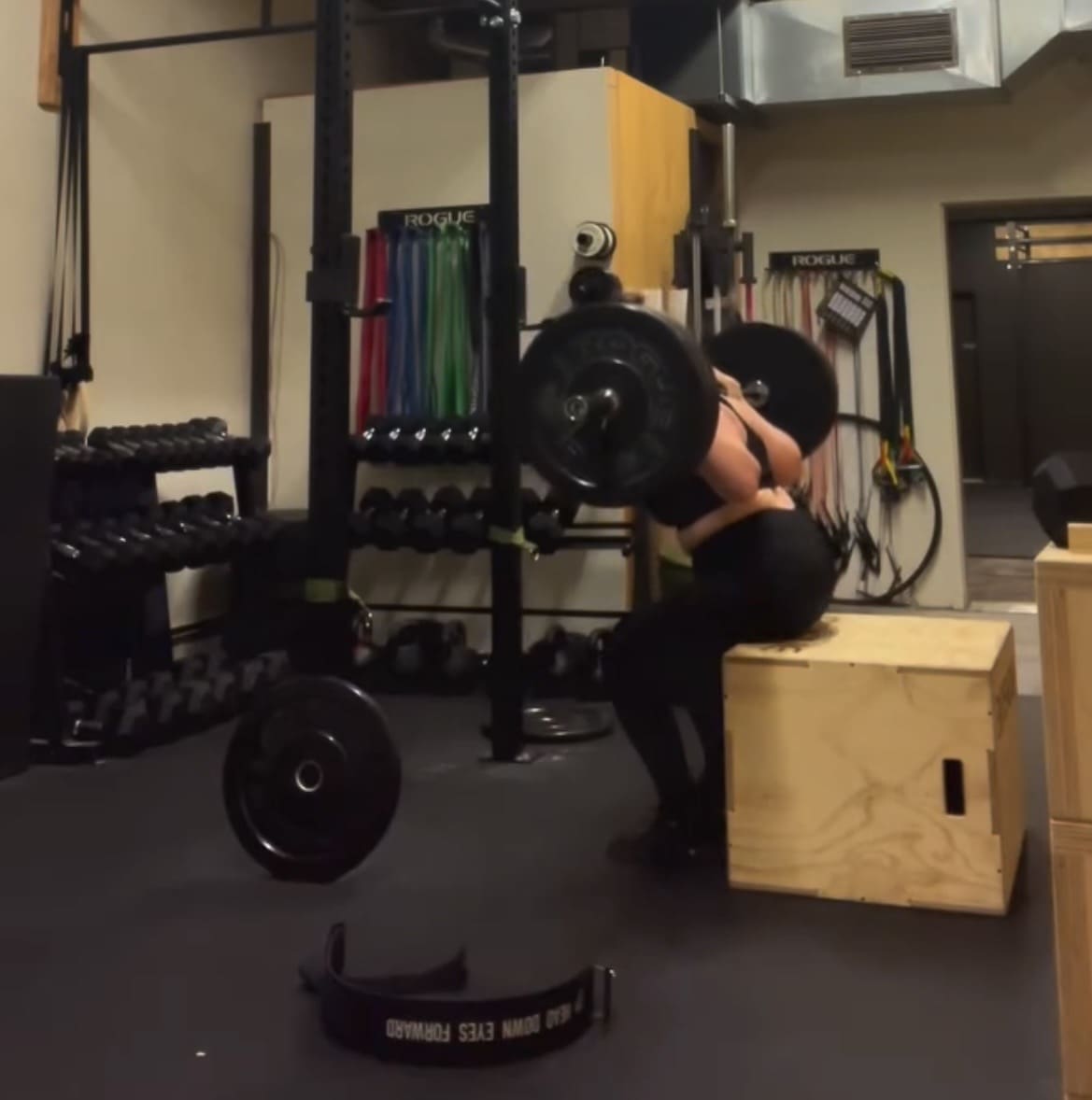
But there is something that most “any ole movement” doesn’t do as deeply: meaningfully load the body. Gentle movement is wonderful, yet it doesn’t always slow muscle loss, support bone density, or improve joint stability over time. Strength training adds resistance, which over time helps the body stay grounded, less fragile, and better able to handle daily loads, stairs, lifting, carrying, even just standing up out of a chair as you age.
From a Chinese medicine lens, strength training maps beautifully to the idea of keeping the body’s resources, blood, Qi, and structure, moving and available. It supports circulation, joint support, muscle tone, and overall stability. The key idea is balance: enough effort to build strength, not so much that you drain yourself.
Chinese medicine tends to caution against overtraining, especially when the workout leaves you exhausted, tight, or run down. The goal is not to “push through” all the time, but to build strength while still supporting recovery. A useful rule is: after training, you should feel challenged, but still basically better than when you started.
A Sturdier Structure, Fewer Band‑Aids
When the structure of the body is sturdier, the “container” doesn’t need to be held together by constant regulation. If the body’s container—muscles, fascia, joints, bones, and postural support—is more solid and resilient, the nervous system and Qi don’t have to work as hard to keep you upright, stable, and “level” moment to moment; this can hold true on a physcal level, but also a mental-emotional one.
In that sense, you rely less on constant “down‑regulation” practices (extra stretching, deep rest, intense nervous‑system‑calming work) just to stay functional. Instead, you can use practices like breathwork, movement, and bodywork not as patches to keep us level, but as ways to actively care for life, prevent strain, and enhance how we move and feel over time.
The Role of Other Forms of Exercise
Walking, stretching, tai chi, yoga, and similar practices matter deeply. As said above, they are incredible for circulation, nervous‑system regulation, and “Qi‑building without depletion.” They often emphasize balance, breath, and mindfulness, which nourish the body’s yin and help calm a busy, stressed system.
But strength training is what builds the physical “scaffolding” that makes daily life feel more supported. From this perspective, it’s not an extra; it’s foundational and arguably THE most important thing you can do for your current health as well as future & longevity! It’s what lets you use the other practices, walking, stretching, breathwork, and so on, as support, prevention, and enhancement, rather than as constant rescue work.
Dr. Devynne and Dr. James are not only Doctors of Acupuncture and Chinese Medicine, but also qualified strength and conditioning coaches. This means care can be shaped in a way that bridges Chinese medicine with practical strength work, helping patients and community members build a body that is not only regulated, but also more capable, resilient, and supported over time.
If you are a patient or community member curious about what it looks like to work strength training into your care plan, reach out. This work is also available remotely. If you are a provider interested in supporting your patients’ journey with this kind of integrative approach, reach out as well.
